
Survey Data: The Path Back for the Ontario Liberals
There's no dominant frontrunner in the Ontario Liberal leadership race, but whoever wins should have a real opportunity to return the Liberals to government.

Survey findings in this post are drawn from a North Poll Strategies online survey of 1,687 Canadians conducted November 1-7, 2025. Results are weighted by region, age, gender, education and past federal vote to be representative of the Canadian voting population. Subscribe to results from North Poll surveys as soon as they are released.
My formal political career started with the Ontario Liberals, working on campaigns, nominations and serving as a riding association President. But it’s been tough to be an Ontario Liberal over the past decade.
Winning fewer than 15 seats in three consecutive elections could mean the end for many political parties, but I don’t think that needs to be the case for the Ontario Liberals. In fact, I think the Liberals are well-positioned to make a political comeback in the next Ontario election, but that will depend on the direction their next leader takes.
I’ve already written my advice for the next Ontario Liberal leader and I’ll admit to being excited for the upcoming leadership race - I’m planning to get involved myself if a candidate enters the contest that excites me.
My enthusiasm for the contest led me to add some Ontario leadership questions to a survey in November, and I’m releasing some of those results today.
The OLP is Better Positioned Than You Think to Win
There’s no question that Doug Ford would win re-election if a vote was held today. But the next election won’t be today, and Ford’s current support shows signs of being unsustainable.
I’ve written previously about how crucial the Canada/US issue has been for Ford to win critical support from federal Liberal voters, but that is a double-edged sword. Current support for Ford’s government is being propped up by his performance on that one issue - it’s the only policy area where Ontarians rate him as performing better than their overall impression of his government.
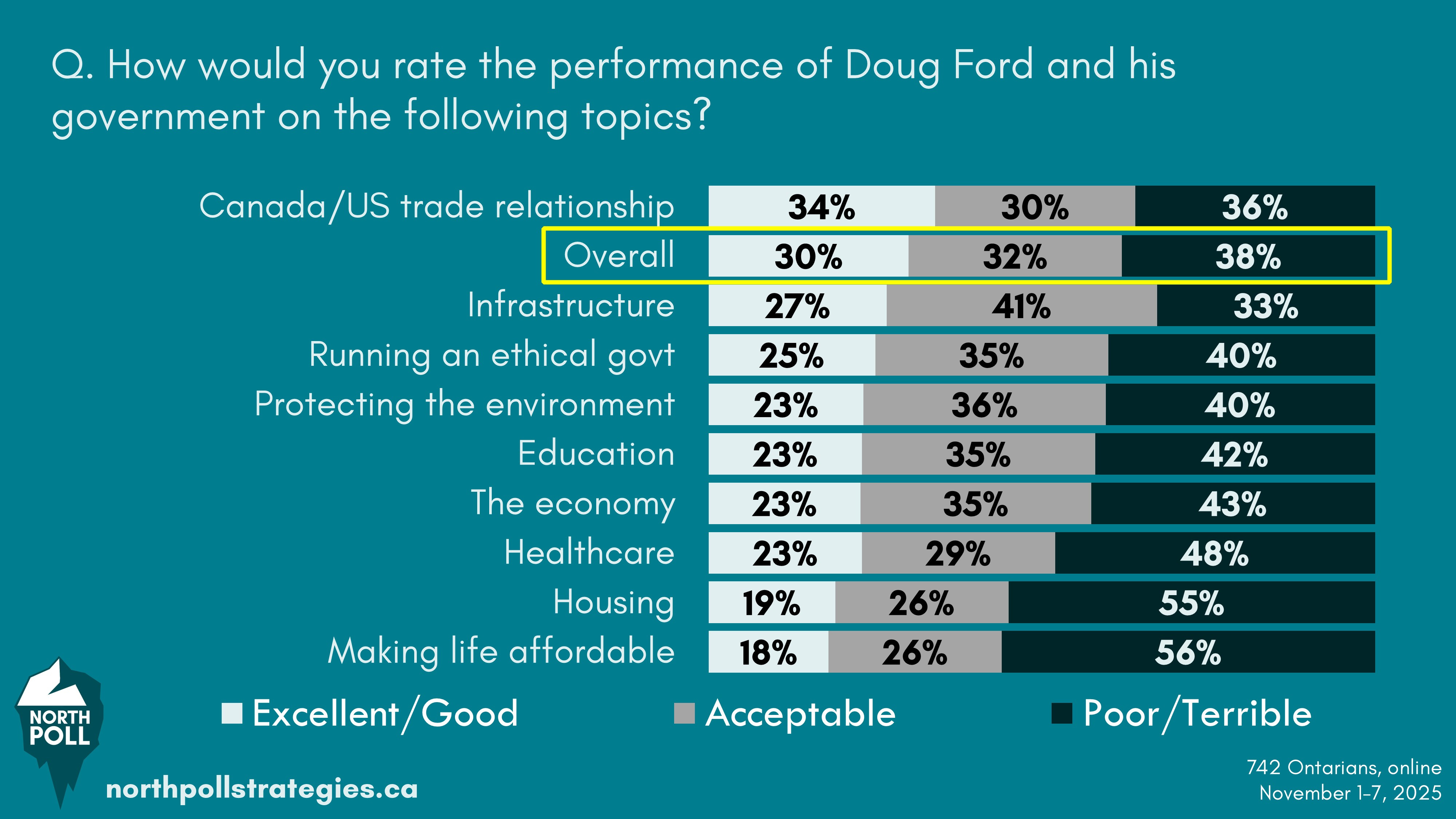
As long as Canada/US issues are the highest profile stories in Ontario politics (and Ford is seen as effective at dealing with them), he should continue to see solid support. However, if the next election is fought over healthcare, housing or affordability, the PCs will be in a lot of trouble.1
We have no idea how prominent Canada/US issues will be in 2029, and the Liberals should definitely be trying to build credibility on the file in case it remains the main story, but there are definitely scenarios where Ontarians become more focused on the things they think Ford does badly.
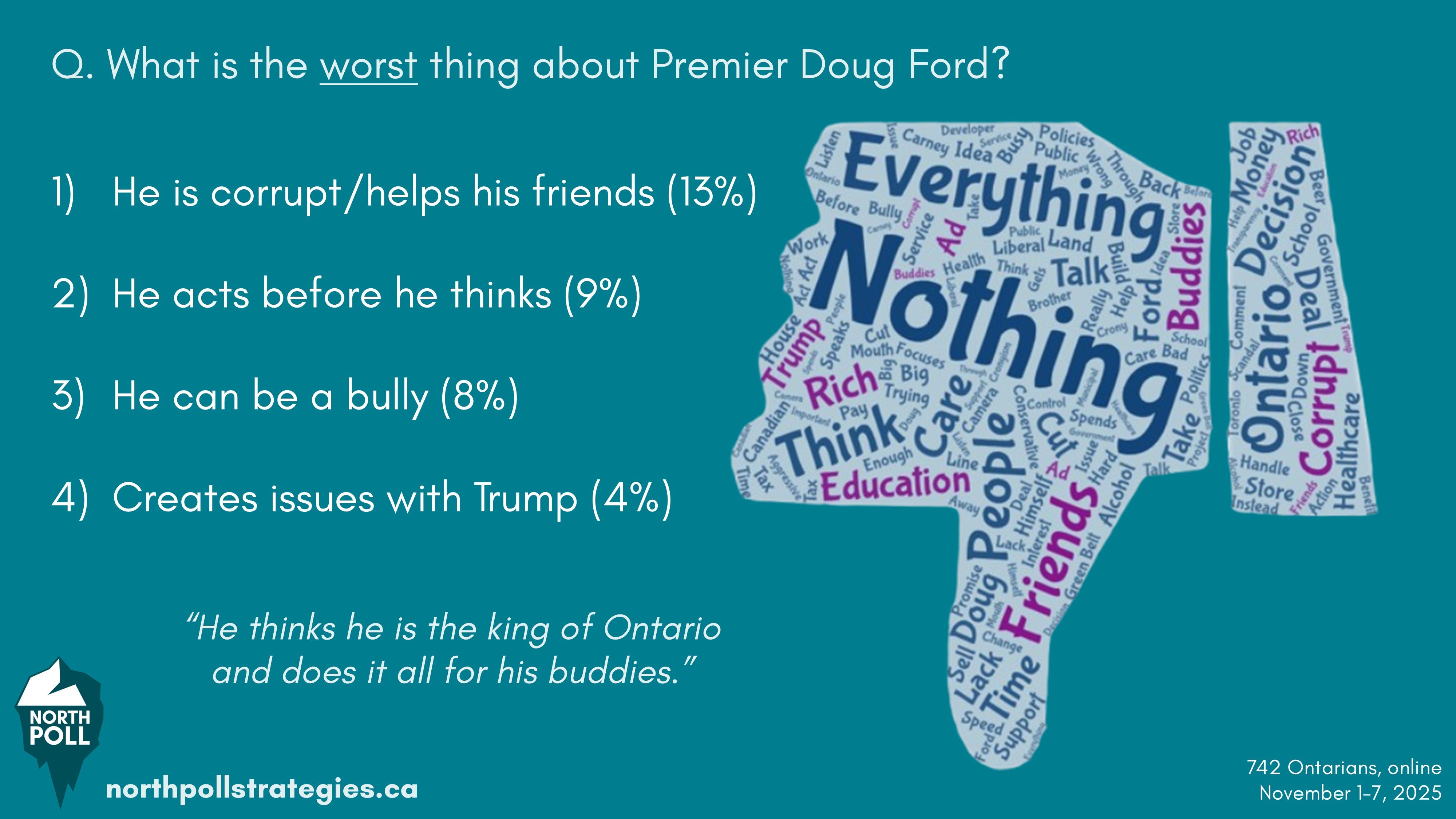
When Ontarians were asked to give their biggest concerns about Ford in an open-ended question, complaints also emerged about corruption and temperament - two tough associations for politicians that tend to only grow as concerns over time:
If Ford’s position is increasingly vulnerable, who stands to benefit?
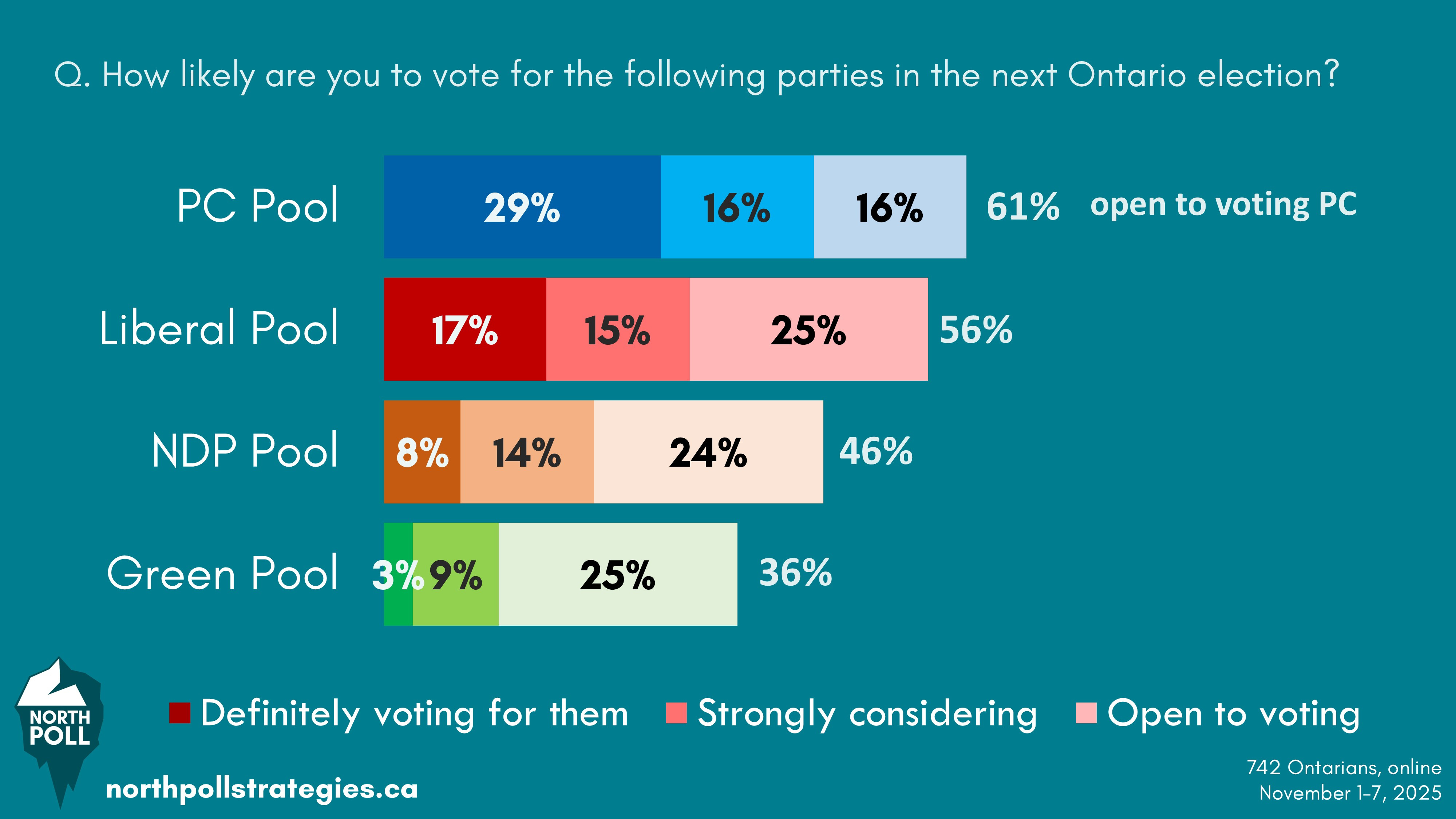
56% of Ontarians say they are open to voting for the OLP, ten points higher than the portion who say the same for the NDP. The Liberals have been performing closer to their 17% basement than their ceiling in recent elections, but they have the most growth potential of any Ontario party.
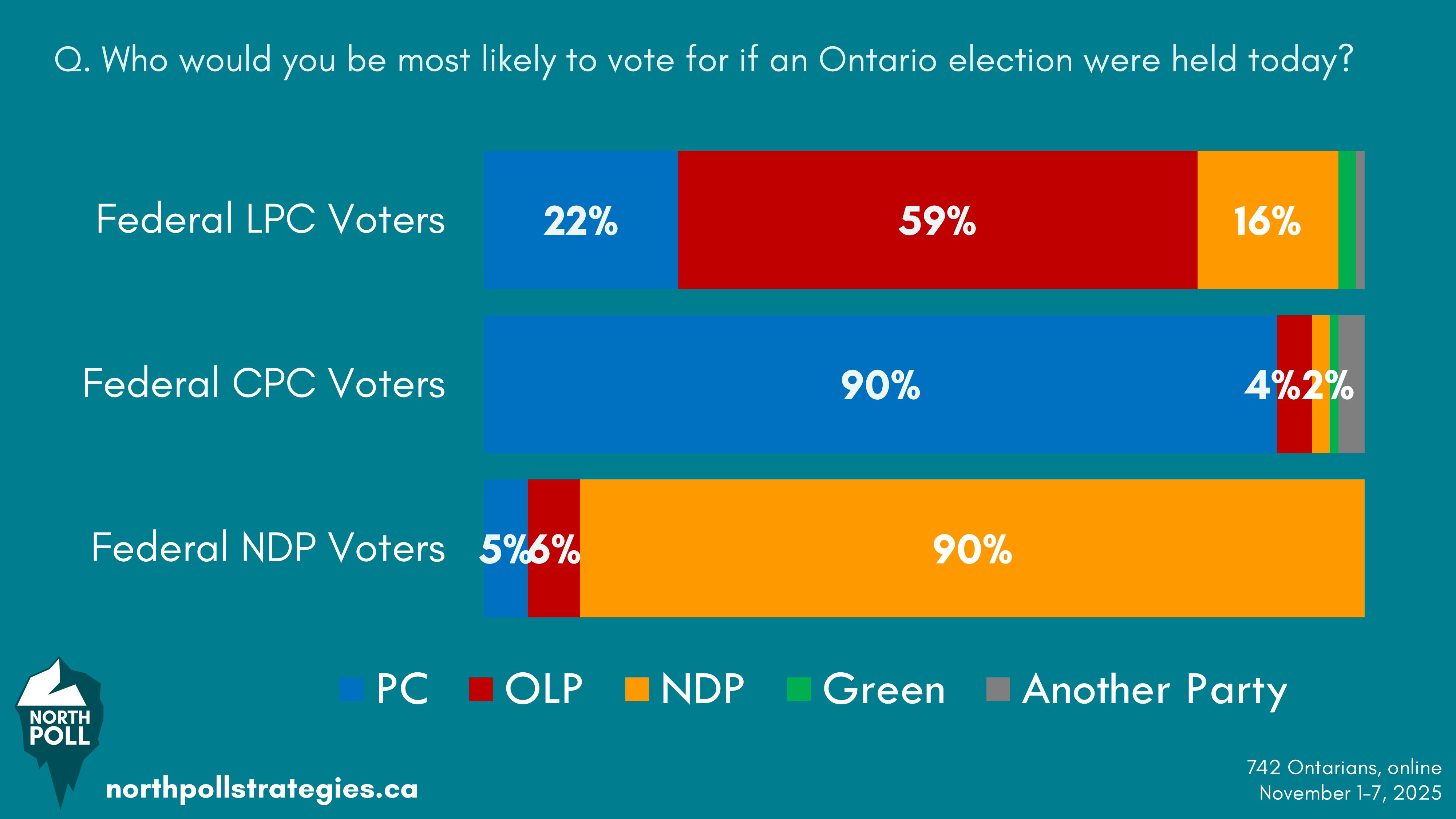
The path to victory is pretty clear and starts with winning over federal Liberals who have not voted for the OLP in recent elections - 41% of Ontarians who voted for Carney in 2025 would currently not vote for the Ontario Liberals.
The State of the Leadership Race
With all that in mind, what can polling tell us about the upcoming leadership contest?
First of all, Mark Carney is the most popular Liberal in Ontario by a wide margin. The next Ontario Liberal leader will have a lot of work to do to establish themselves in the minds of voters to a similar level, but they may benefit from the Prime Minister’s revitalization of the “Liberal” brand in the province.
That is particularly the case for the rumoured federal politicians with interest in the contest, as bringing the federal and provincial Liberal brands closer together would appeal to most Ontario Liberals at the moment.
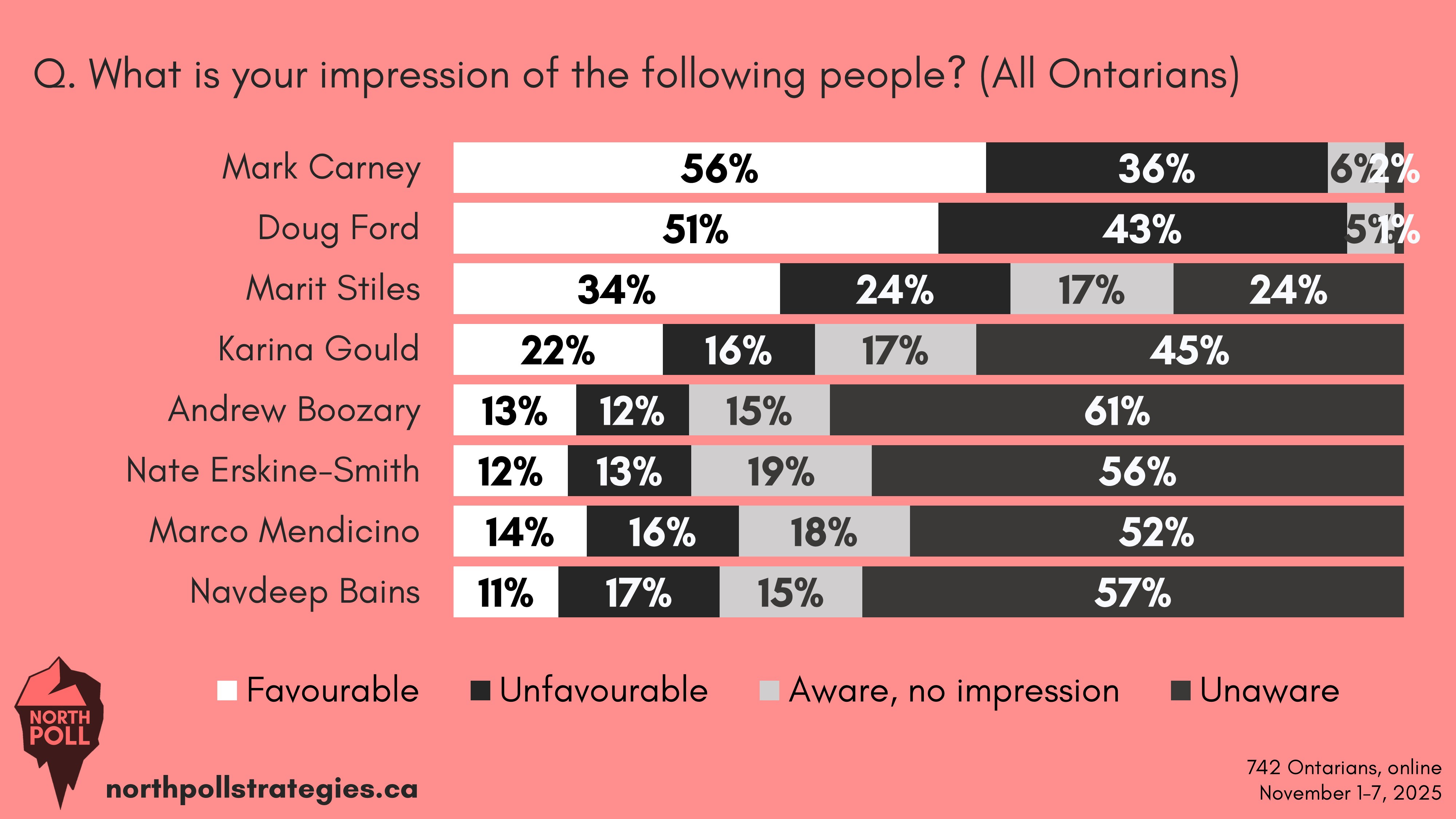
General public polling is notoriously non-predictive for provincial leadership races as the voters in these contests are a small portion of the population. Leadership contests often come down to who can sign up the most members with good mobilization, so they aren’t necessarily reflective of the broader opinion of party voters.
The closest you can come to reflecting who might vote in a leadership race is often by looking at highly engaged voters for the party in question like in the chart below:
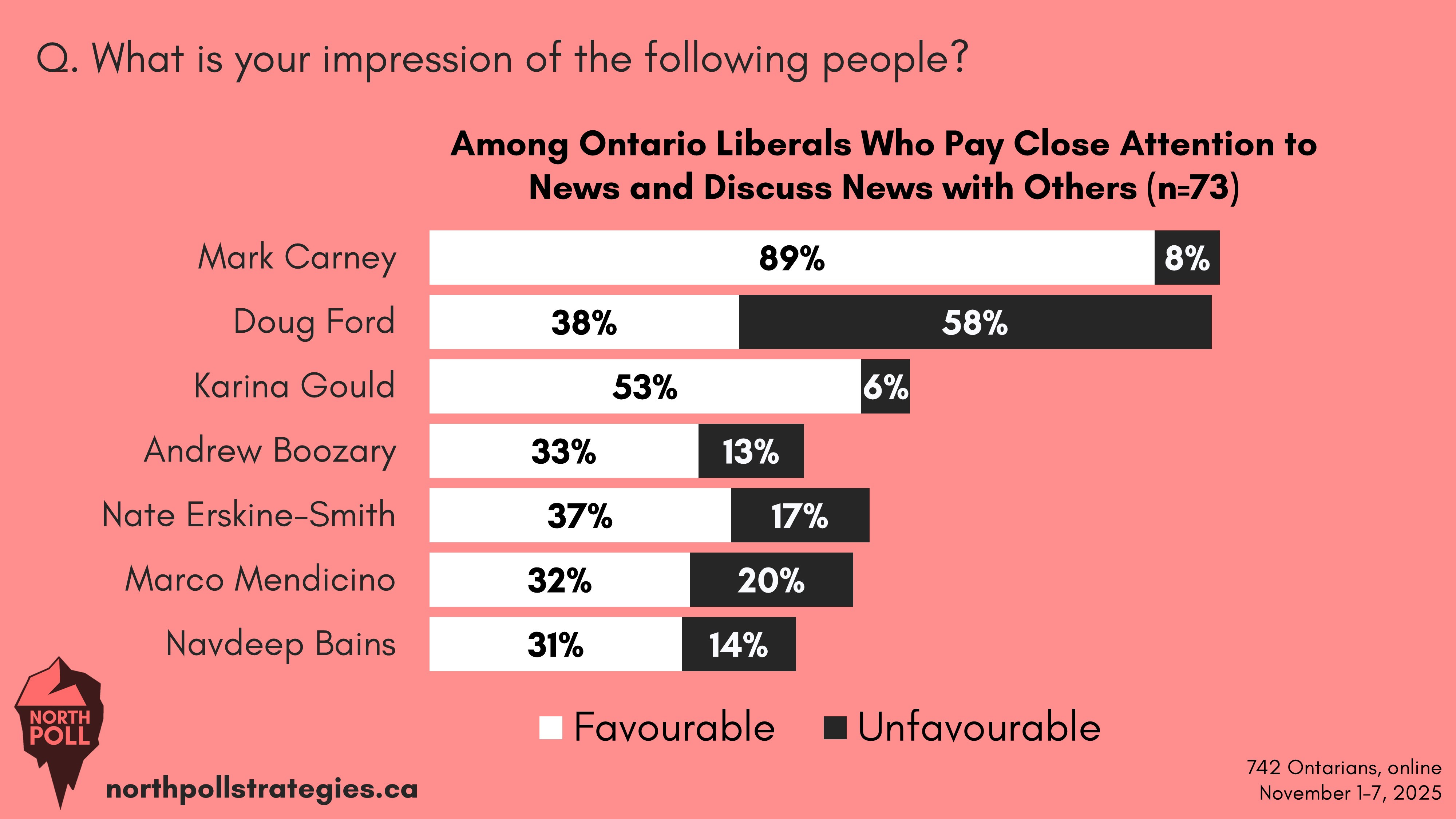
With this group, Karina Gould (who is not running) has an excellent favourability rating of +47, an indicator that those who were closely watching the federal leadership race left with elevated impressions of her, even if those impressions did not convert into votes on the final ballot.
With Gould out of the race, none of the remaining potential candidates tested have a decisive starting advantage. Depending on which candidates actually enter the race, we could see a tightly contested contest decided by the quality of campaigns.
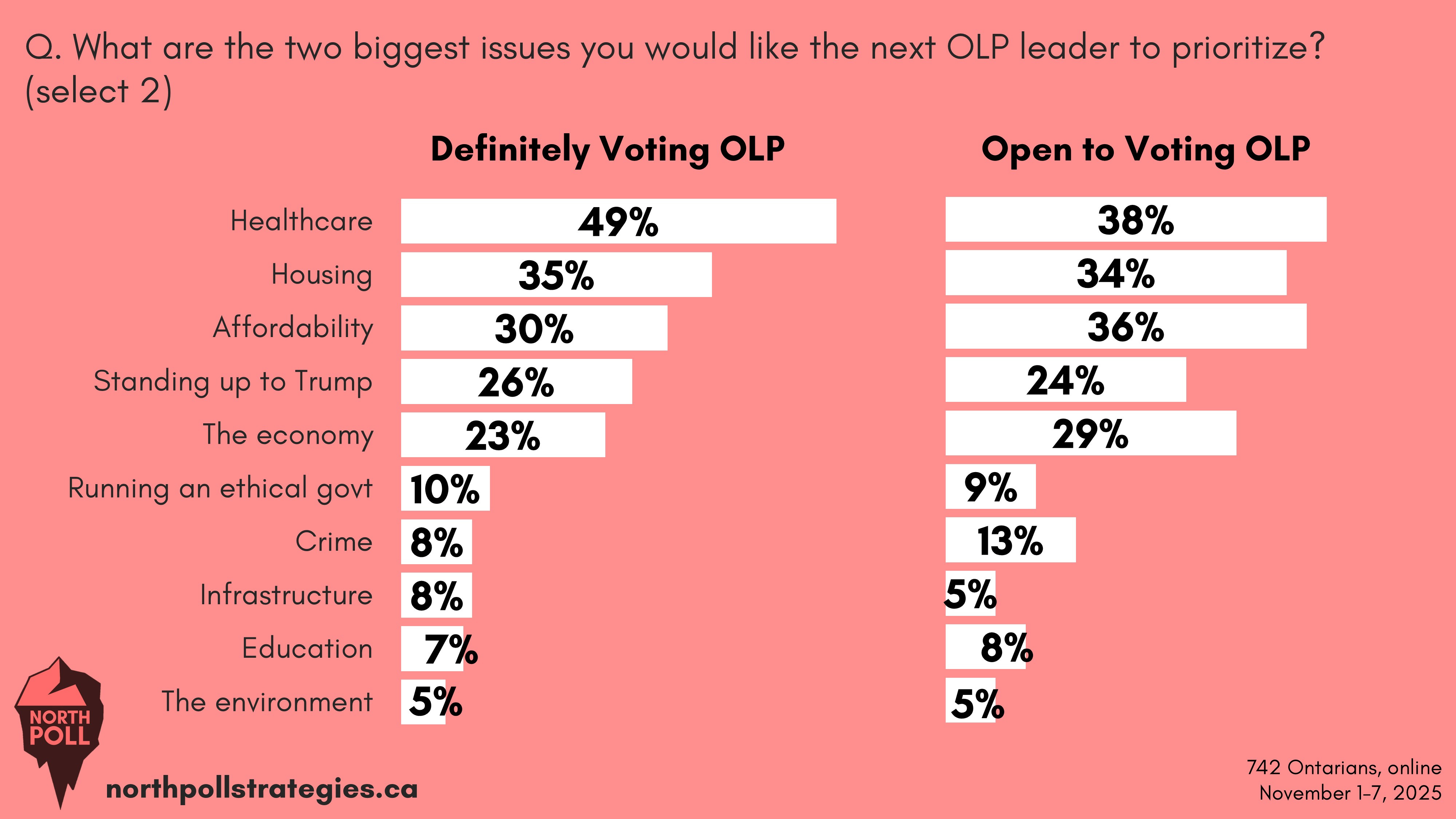
From a policy standpoint, whoever wins is likely to be a candidate with answers on the top three issues that the Liberal base prioritizes - healthcare, housing and affordability:
Even when survey participants were given the ability to answer in their own words, these three policy topics rise to the top as the most important factors in deciding their support:
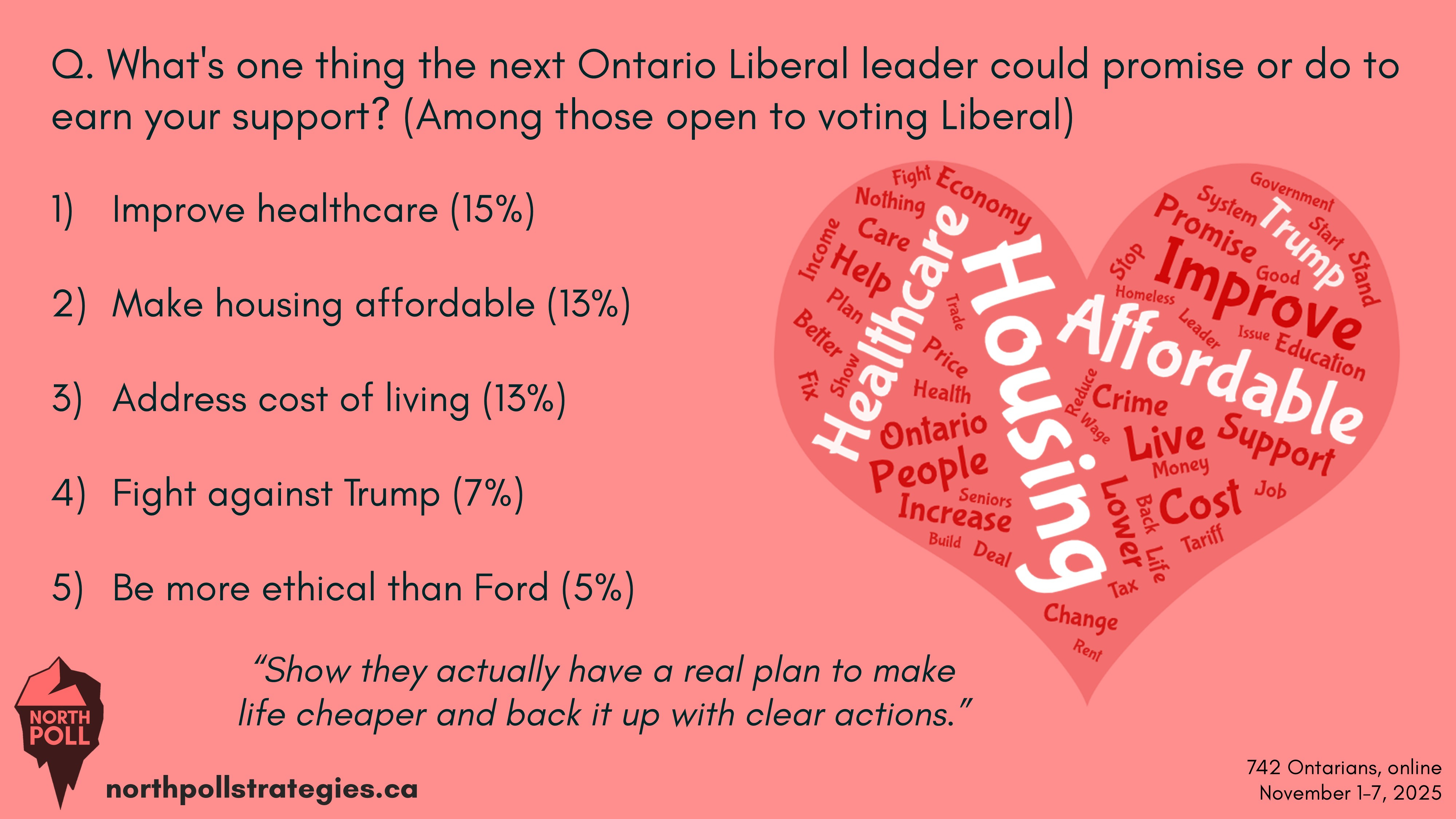
The fact that these three topics are likely to drive the leadership race is actually great news for the OLP. There have been a lot of leadership races for other parties in recent years that are focused on policy areas that aren’t helpful for general election success - in particular the debates over gun policy and abortion that have moved many votes in recent federal Conservative leadership races.
The OLP is unlikely to have an issue with that. Instead, it looks like candidates will be spending a lot of time emphasizing issues that are not just important issues for Ontarians, but which are also key contrasts with Doug Ford.
Ontario Liberals are saying they want a new leader who is highly credible in the policy areas that the general Ontario public feels Ford is failing at. If that’s what they choose in the end, the next Liberal leader will be extremely well-positioned to offer a better option to the biggest weaknesses of the Ford and PC brands.
It’s also noteworthy that the Ford’s strength on Canada/US is tied to Ford’s personal brand. If he doesn’t run for re-election, there’s no guarantee the next PC leader would enjoy the same advantage on Canada/US topics.